Swim Instructor Onboarding Checklist: The First Week
9 min read
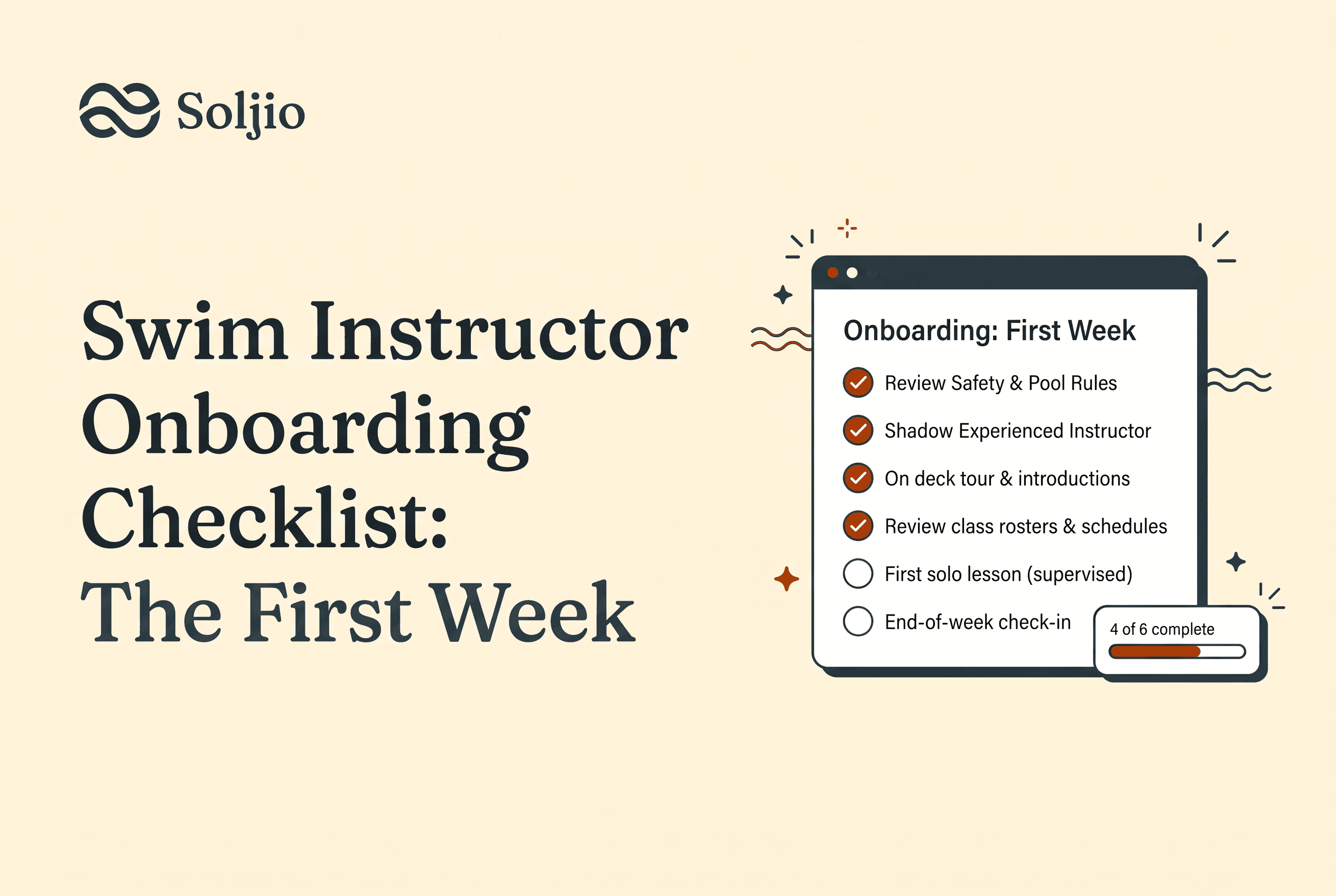
A new swim instructor should spend the first week on five things in order: orientation, supervised observation, practice with rosters and attendance, practice with consistent skill observations, and a manager signoff before they teach on their own. That is the whole swim instructor onboarding checklist in one sentence, and the rest of this post turns it into days.
Most independent schools onboard from memory. The owner remembers what to say, a group chat holds the schedule, and a spreadsheet holds the roster. It works for the first hire and breaks on the fifth, because each new instructor hears a slightly different version of how things run.
A thicker manual won't fix it. A short, repeatable sequence will, one that puts a new hire in front of the same records every other instructor uses. Here is that sequence, day by day, written for owners, aquatics directors and lesson coordinators.
How should a swim school onboard a new instructor?
Onboard in a fixed order: orient, observe, practice the paperwork, then teach with a supervisor present. Skipping straight to teaching is the most common mistake. It produces inconsistent attendance records and skill notes that mean different things to different people.
Think of the first week as two tracks running together. The first track is the pool: watching how your lessons actually run. The second track is the records: learning where the roster lives, how attendance is marked and what a skill observation looks like at your school. Most schools only plan the first track. The second is where instructors drift apart, so it gets its own day in this checklist.
Treat the checklist below as a template you edit once and reuse for every hire, seasonal or permanent. A swim school new instructor training program doesn't need to be elaborate. It needs to be the same every time.
Before day one: what to prepare
Do the prep before the instructor arrives so day one is spent learning, not waiting. A short list covers it:
Confirm the instructor's first-week schedule and which supervisor they report to each day.
Decide which classes they will observe, covering at least two different levels.
Pull together your handbook and policies in one place, whatever form they take today.
Make sure the roster they will practice on is current, and that they know where to find it.
Set a time for the end-of-week signoff conversation now, not on Friday afternoon.
If your roster still lives in a spreadsheet, get it into one shared place before the hire starts. Soljio is swim school software that keeps programs, schedules, rosters, families and progress in one workspace, and rosters can be imported from a spreadsheet. One shared roster means a new instructor learns from the real thing instead of a copy someone emailed them last term.
Also write down who owns what. If a new hire asks who decides a level change or who handles a parent question, the answer should exist before they ask.
Day 1: orientation, role boundaries and school policies
Day one is orientation, and the goal is clarity about the job, not volume of information. Walk the instructor through your school: how a lesson day is laid out, who the supervisors are, and where everything is kept.
Cover role boundaries explicitly. Say what an instructor decides on their own, what goes to a supervisor, and what goes to the front office. Parent questions about billing, schedule changes and level moves are classic examples. Instructors who know the boundary stay out of trouble. Instructors who guess create work for you.
Go through your handbook and school policies in person instead of handing over a PDF and hoping. Attendance expectations, how you communicate with families, what you expect on deck, and how to escalate a concern all belong here. Keep the focus on how your school operates. Safety training and legal requirements are covered by your facility and qualified supervisors, which a later section returns to.
End the day with a five-minute check: ask the instructor to tell you, in their own words, who they go to for what. If they can't, repeat that part tomorrow.
Days 2 to 3: supervised observation across levels
Shadowing works when it has a task attached. Put the new instructor in at least two different levels over these two days, and give them something specific to watch for instead of letting them stand at the edge of the deck.
A useful observation sheet asks three things per class: how the instructor opens the lesson, how they move swimmers between skills, and how they close the lesson and talk to families. Have the new hire write short answers. You're not grading them. You're teaching them to see your school's teaching style on purpose.
Pair them with a different experienced instructor on each day. Two examples are better than one, and they show that your standards belong to the school, not to one person's habits.
If you use a class timetable, have the new hire look at how it's built. Our guide to checking pool and instructor capacity on a swim class timetable explains what that looks like, and it helps a new instructor understand why a class sits where it does.
At the end of day three, spend ten minutes together. Ask what they noticed, what surprised them, and what they'd like to see again. This is also the moment to correct any early misunderstandings.
Day 4: practice reading rosters, marking attendance and recording skill observations
Day four is the day most onboarding plans skip, and it matters most for consistency. The instructor practices the records work, on the real roster, before any live class depends on it.
Start with the roster. Have them open it, find their classes for the coming week, and read it aloud: who is in each class, which level it is, and whether anything stands out. Add a trap on purpose. Two swimmers with the same name is a real problem on deck, and our post on a same-name swimmers roster check shows what to look for.
Next, attendance. Have the instructor practice marking it against a class they just observed. In Soljio, instructors take attendance and mark skills from the deck, so this is a good day to let them do exactly that on the same system they'll use for real. If you want a refresher on the habit itself, our guide to swim school attendance tracking on pool decks covers it.
Then skill observations. The goal is that two instructors watching the same swimmer write notes that mean the same thing. Agree on a short standard: name the skill, say what you saw, and avoid vague words like "good" or "struggling." Practice on a few sample swimmers, compare notes with a supervisor, and adjust. For examples of clear wording, see swim lesson progress notes examples.
Finally, read a sample handover note together, since a new hire will be on both sides of one soon. The swim instructor handover notes template is a good model.
Day 5: supervised teaching segments and manager signoff
On day five the instructor teaches short segments with a supervisor present, then you sign off or you don't. Both parts matter.
Keep the segments small: a warm-up, one skill block, or the end-of-class wrap-up with families. The supervisor watches, then gives specific feedback within the hour while it's fresh. Specific beats kind. "Your attendance was marked before the first swimmer entered the water, and your skill note named the exact skill" teaches more than "nice job."
Then run the signoff. A short list keeps it honest:
Can they find their roster and read it accurately?
Do they mark attendance the way your school expects?
Do their skill observations match the standard you agreed on day four?
Do they know the role boundaries and who to ask?
Did a supervisor see them teach a segment?
If the answer is yes across the board, the manager signs off and the instructor moves to their regular schedule. If one item is weak, extend that part for another few days. Signoff is a decision, not a ceremony. Write it down, with the date and who signed, so the next hire starts from the same record.
What to leave to your facility and qualified supervisors
This checklist covers how your school operates. It doesn't set safety rules. Certifications, lifeguarding coverage, instructor-to-swimmer ratios, emergency procedures and legal requirements are decided by your facility, your local regulations and the qualified supervisors responsible for them.
This matters because searches like "swim instructor certification requirements 2026" return answers that vary by region, pool operator and program type. A blog post can't tell you what applies to your pool. Your facility or governing body can.
Build the handoff into your plan instead of leaving it implied. On day one, state clearly which topics belong to the facility and who the qualified supervisor is. Ask the instructor to confirm they've completed whatever your facility requires before they teach, and keep that record wherever your facility asks you to keep it.
The operational checklist and the safety requirements sit side by side. Neither replaces the other.
After week one: the 30-day check-in and keeping onboarding repeatable
Schedule a 30-day check-in before the new hire finishes week one. By then they've taught real classes, hit real problems and formed opinions about your systems. Ask what confused them, which records they found hard to fill in, and what they wish someone had told them on day one. Fix the checklist with their answers.
Repeatability comes from three habits. Keep one version of the checklist and edit it in place. Keep the roster and skill records in one shared workspace so every instructor learns from the same source. Keep a signoff record for each hire.
This is where software earns its place in onboarding. When programs, schedules, rosters and skill progress sit in one workspace, a new instructor's practice day uses the same records they'll use all season. If you're weighing options, our swim school management software owner buying checklist lays out what to compare.
You don't need a perfect program. The fifth instructor you hire should get the same first week as the first.
Make week one the same for every hire
A good first week is a fixed sequence, not a good memory. Orient on day one, observe on days two and three, practice rosters, attendance and skill notes on day four, and sign off on day five. Leave safety and legal requirements to your facility and qualified supervisors. If your roster and skill records still live in a spreadsheet and a group chat, the easiest next step is to get them into one shared workspace before your next hire starts. Soljio is in private beta with a small number of swim schools, so reach out at hello@soljio.com to talk through whether it fits your onboarding.